
Pest Control News Archives
The Real Dangers of Rodents: Health Risks and Property Damage
Understanding the Health Risks: Rodent-Borne Diseases
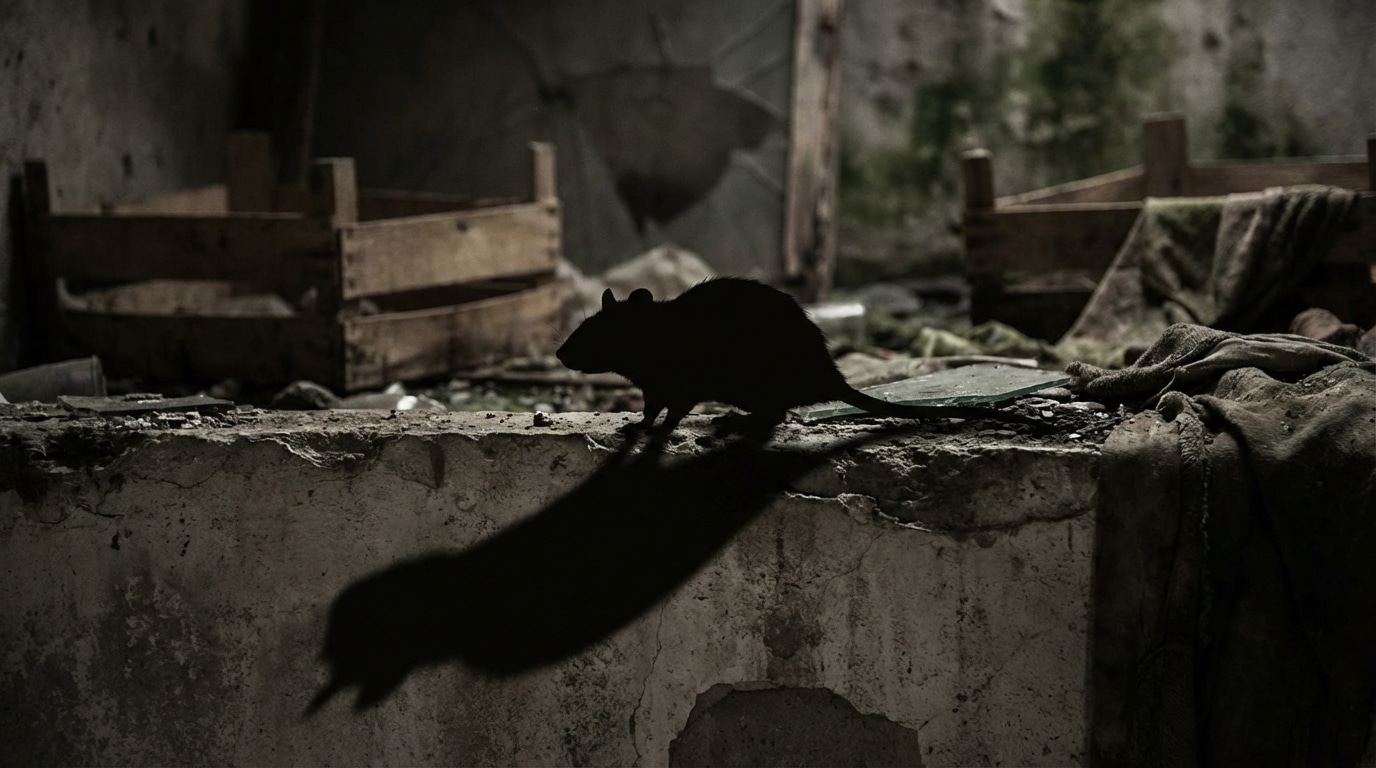
A rodent infestation is far more than a simple nuisance; it is a significant public health threat. Rodents like mice and rats are vectors for over 35 different diseases, which can spread to humans directly and indirectly. Addressing a rodent problem is not just about protecting your property—it’s about safeguarding the health of your family, employees, or tenants from serious illnesses that these pests carry into our homes and businesses across Utah.
How Rodents Spread Disease: Transmission Pathways
Rodents transmit pathogens through several common pathways that put you at risk without you ever seeing the animal itself. Understanding these vectors is the first step in protecting yourself. Contamination often occurs through direct contact with rodent feces, urine, or saliva, or from a bite. More insidiously, diseases can become airborne when dust contaminated with rodent droppings or urine is disturbed—a common occurrence during cleaning.
Indirect transmission is just as dangerous. Rodents carry parasites like ticks, mites, and fleas that can transfer diseases to humans and pets. They also contaminate food preparation surfaces and stored food products simply by walking across them, leaving a trail of harmful bacteria like Salmonella. This makes kitchens and pantries a primary zone of risk.
Key Rodent Diseases and Their Symptoms
Many Utah residents underestimate the severity of illnesses carried by common rodents. While some diseases cause mild, flu-like symptoms, others can lead to severe complications or even death. Recognizing the primary threats found in our local environment is critical for taking prompt action, both in pest control and in seeking medical attention if symptoms appear.
Hantavirus Pulmonary Syndrome: A Deadly Threat
Hantavirus is a severe, often fatal, respiratory disease transmitted by infected rodents, primarily the deer mouse, which is prevalent in Utah’s rural areas and along the Wasatch Front foothills. Humans become infected by inhaling aerosolized particles from the rodent’s urine, droppings, or saliva. There is no specific cure for Hantavirus, making prevention the only effective defense.
- Transmission: Inhaling contaminated dust, typically when sweeping out sheds, cabins, or little-used structures.
- Symptoms: Early symptoms mimic the flu, including fever, deep muscle aches, and fatigue. After a few days, a cough and shortness of breath develop as the lungs fill with fluid.
Salmonellosis: Food Contamination Risks
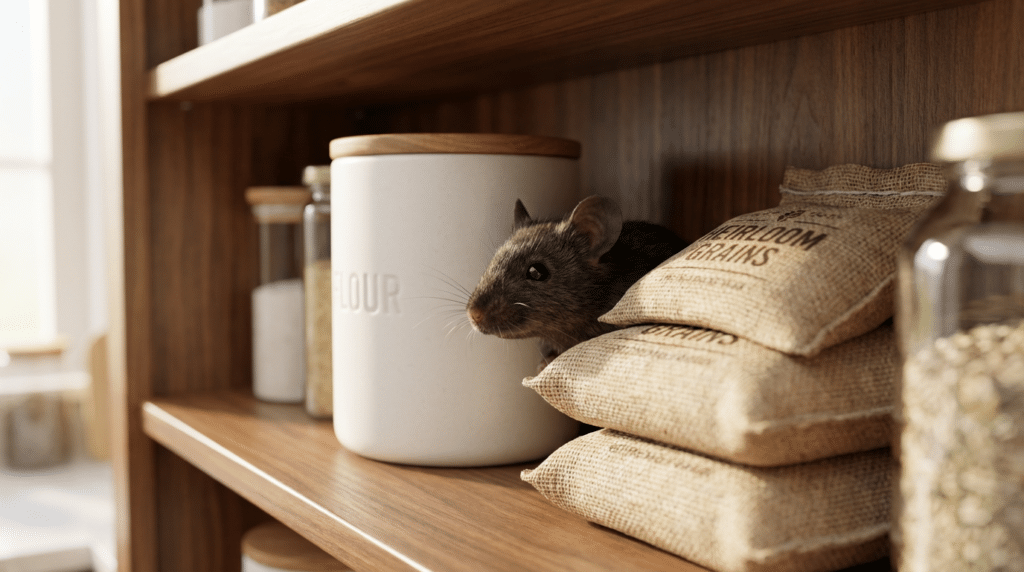
Salmonellosis is a bacterial infection that affects the intestinal tract, commonly caused by consuming food or water contaminated with rodent feces. A single mouse can produce dozens of droppings per day, easily contaminating countertops, cutlery drawers, and packaged foods. For restaurants and commercial kitchens, a rodent infestation poses a direct threat of a foodborne illness outbreak.
- Transmission: Eating or drinking contaminated food or water; touching contaminated surfaces and then your mouth.
- Symptoms: Diarrhea, fever, and abdominal cramps, typically appearing 12 to 72 hours after infection.
Leptospirosis: Water Contamination Concerns
Leptospirosis is a bacterial disease spread through the urine of infected animals, including rats. The bacteria can enter the body through skin or mucous membranes, especially if there are cuts or abrasions, or through the eyes, nose, or mouth. This disease is a risk anywhere rodent urine might contaminate standing water, soil, or food sources.
- Transmission: Contact with water, soil, or food contaminated with infected urine.
- Symptoms: A wide range of symptoms including high fever, headache, muscle aches, vomiting, and rash. Without treatment, it can lead to kidney damage, meningitis, or liver failure.
Rat-Bite Fever: Beyond the Obvious Bite
Rat-bite fever (RBF) is a bacterial illness caused by pathogens transmitted by infected rodents. Despite its name, you can contract RBF without being bitten; handling an infected rodent or consuming contaminated food or water is enough. The disease is caused by two different bacteria, and symptoms can vary depending on which one is the cause.
- Transmission: Bites, scratches, or contact with dead rodents; consuming contaminated food or drink.
- Symptoms: Fever, vomiting, headache, muscle pain, and a rash. Joint pain can become severe if left untreated.
Other Potential Illnesses Transmitted by Rodents
Beyond the most common diseases, rodents are also linked to a host of other illnesses. These include lymphocytic choriomeningitis (LCM), a viral infectious disease transmitted by the common house mouse, which can cause serious neurological complications. They can also carry pathogens for Tularemia and even Bubonic Plague via the fleas they host, reminding us of the historical significance of rodent control for public health.
What We’ll Cover:
- Beyond Health: Property Damage Caused by Rodents
- Protecting Your Home and Health: Prevention and Control
- Common Questions About Rodent Dangers Answered
- Your Trusted Partner in Rodent Control
Beyond Health: Property Damage Caused by Rodents
The financial cost of a rodent infestation can be staggering, extending far beyond the price of a few traps. Rodents cause relentless, progressive damage to the very structure of your property, creating safety hazards and depreciating its value. For business owners and property managers, this damage translates directly to lost revenue, repair costs, and potential liability.
Structural Damage: Gnawing Pests
Rodents have incisors that grow continuously, forcing them to gnaw constantly to keep them worn down. This biological imperative means they will chew through almost any material in their path. We’ve seen them destroy wood support beams, PVC and PEX plumbing pipes, drywall, and attic insulation. This not only weakens a building’s integrity but can also lead to secondary damage like water leaks and mold growth.
Over our 20+ years of service in Utah, we’ve found that unnoticed rodent activity is a leading cause of inexplicable structural wear and tear. This is why professional residential and commercial pest control services focus on exclusion to prevent this damage before it starts.
Fire Hazards: Rodents and Electrical Wiring
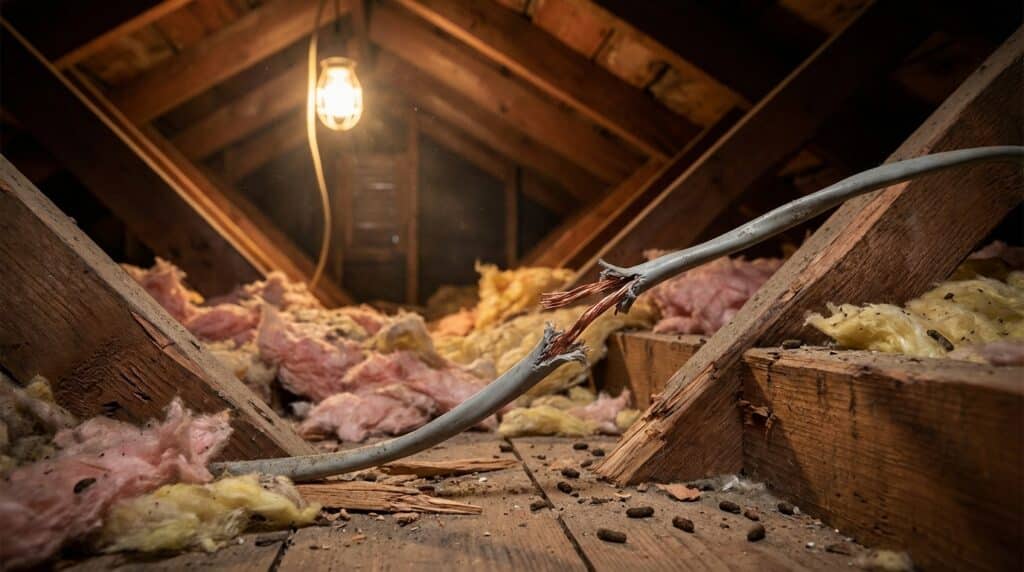
One of the most life-threatening dangers rodents pose is the risk of fire. They frequently strip the insulation from electrical wiring to use for nesting material, leaving the wires exposed within walls and attics. This creates a severe fire hazard from arcing, where electricity jumps between exposed wires, which can easily ignite surrounding wood, insulation, or nesting materials. An estimated 20-25% of all house fires of unknown origin are attributed to pests.
Contamination and Odor Issues
An established rodent colony creates a deeply unsanitary environment. Their urine and feces accumulate in walls, attics, and crawl spaces, soaking into insulation and wood. This not only poses the health risks mentioned earlier but also creates persistent, foul odors that are notoriously difficult to remove. In a commercial setting, such as a restaurant or retail store, these odors can drive customers away and ruin a business’s reputation.
Protecting Your Home and Health: Prevention and Control
Effective rodent management combines proactive prevention with targeted control strategies. Stopping an infestation before it begins is always the most effective approach, saving you from costly damage and health scares. A professional pest management plan is built on this very principle, creating a fortress around your property.
Exclusion: Sealing Entry Points
The single most effective long-term rodent control strategy is exclusion—physically blocking them from entering your home or business. A mouse can squeeze through a hole the size of a dime, and a rat can fit through a quarter-sized opening. We inspect properties for these vulnerabilities, sealing gaps around utility pipes, vents, foundation cracks, and under doors with rodent-proof materials like steel wool and robust sealants.
Sanitation: Eliminating Food and Water Sources
Rodents invade structures for three reasons: food, water, and shelter. Removing their access to these resources makes your property far less attractive.
- Store all food, including pet food, in airtight containers made of glass or heavy-duty plastic.
- Fix leaky faucets and pipes to eliminate water sources.
- Keep inside and outside garbage cans tightly sealed.
- Clear away clutter like woodpiles or debris near your foundation, which provide ideal rodent harborage.
Safe Cleanup Practices for Rodent Infestations
Cleaning up after rodents is hazardous work that requires specific safety protocols to avoid airborne disease transmission. Never sweep or vacuum dry droppings. The CDC recommends wearing rubber gloves and a mask, ventilating the area for at least 30 minutes, and spraying the droppings and urine with a 1:10 bleach-to-water solution. Let it soak for five minutes before wiping it up with a paper towel, then double-bag and dispose of all materials.
When to Call a Professional: Pest Control and Medical Advice
While DIY trapping can catch an occasional mouse, it rarely resolves an established infestation. Rodents are intelligent, reproduce quickly, and are adept at avoiding amateur control efforts. If you see signs of rodents—droppings, gnaw marks, or scurrying sounds—it’s time to call for professional help. Our technicians are trained not only in eradication but also in identifying and sealing entry points to prevent future invasions, a critical step often missed in DIY attempts. Our services are backed by a 100% Satisfaction Guarantee, ensuring the job is done right.
Common Questions About Rodent Dangers Answered
We receive questions daily from concerned homeowners and business managers across Salt Lake County and beyond. Below are answers to the most common queries about the real-world dangers posed by rodents.
Yes, rodent problems pose a massive risk to Utah businesses. A single sighting can destroy a restaurant's reputation, lead to negative online reviews, and result in failed health inspections. For warehouses and retail shops, rodents can damage thousands of dollars in inventory. Our expert commercial pest control services provide discreet and effective solutions to protect your business, employees, and customers.
Your Trusted Partner in Rodent Control
For over 20 years, Legacy Pest Control has protected Utah families and businesses from the dangers of pests. As a local, family-owned and operated company, we are deeply invested in the well-being of our communities. Our licensed technicians use proven Integrated Pest Management (IPM) strategies and eco-friendly solutions that are safe for children and pets. Choosing us means partnering with an experienced team dedicated to solving your problem for good.
We stand behind our work with a 30-day money-back guarantee, offering you complete peace of mind. We don’t just eliminate pests; we restore your sense of safety and security. Our team is also proud to support our community by offering a Military Discount for active and retired personnel.
Protect Your Property and Health with Confidence
A rodent problem is a threat that grows worse with time, increasing the risks to your health and the integrity of your property. Don’t wait for a close call with a disease or a fire hazard from chewed wiring to take action. Take control of the situation today with a professional assessment from a team you can trust. Let our two decades of experience work to safeguard your most valuable investments.
Contact Legacy Pest Control to get a free, no-obligation estimate for our comprehensive rodent control services. We will inspect your property, identify the source of the problem, and develop a customized plan to eliminate the threat and prevent its return. Protect your health, your property, and your peace of mind.
Related Reads:


